


ELISS 2025: Celebrating 10 Years of Education and Training in Laser Science
The 10th anniversary edition of the ELI Summer School (ELISS) series brought together more than 110 students from 22 countries in Dolní Břežany, Czech Republic, for a week of education and training. With a comprehensive 5-day programme, 30 renowned speakers, including 2018 Nobel Laureate Donna Strickland, and more than 50 poster presentations, ELISS 2025 highlighted the range of topics related to ELI and the diversity of the community of young scientists shaping the future of laser research.
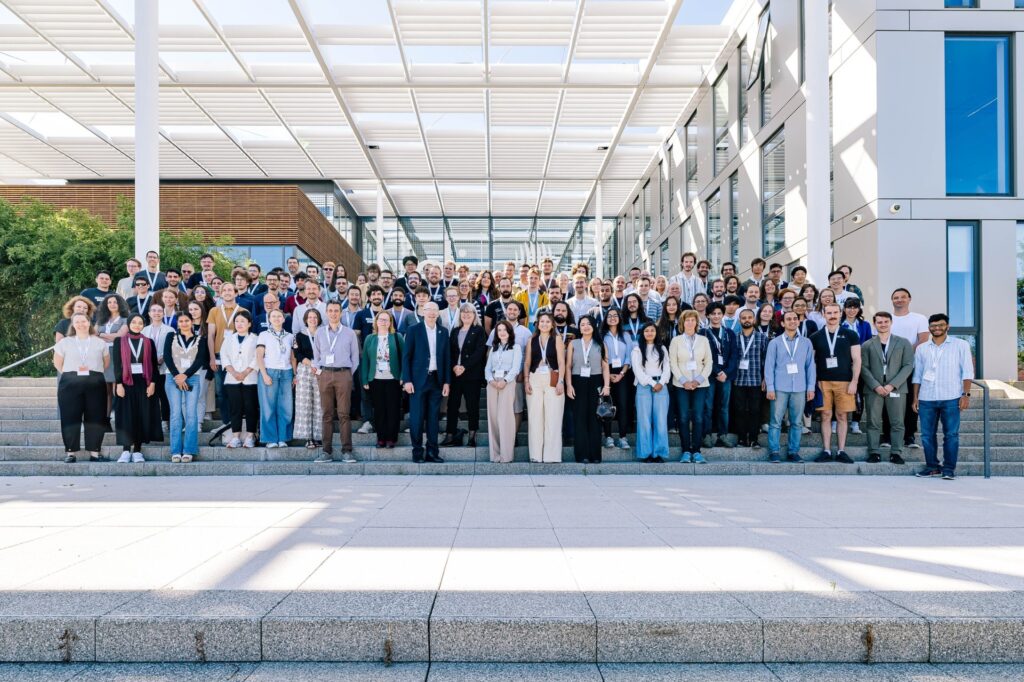
Since its launch 10 years ago, the ELI Summer School has grown into a cornerstone for ELI to connect with the next generation of researchers. Each year the host of the school rotates among ELI’s facilities, offering participants exposure to the latest science and infrastructure developments at ELI. The comprehensive 5-day programme featured 30 speakers and spanned topics from ultrafast physics and advanced photon sources to plasma applications, nuclear photonics, and attoscience. Students also engaged in hands-on workshops and presented their own work during the poster session.
“We carefully curated this year’s programme to cover the scientific areas that ELI caters to and enables,” said Anna Zymaková, Scientific Programme Chair of ELISS 2025. “Having once been a participant myself, ELISS opened the door for me to later join ELI as a researcher. I am proud that I can now inspire and support the next generation of scientists in the same way.”
The programme set out with tutorials on the physics and technology of ultrafast high-power lasers and introduced ELI’s lasers. The programme included thematic areas like plasma physics, high energy density physics, inertial confinement fusion, as well as nuclear physics, particle acceleration and biological and medical applications. The variety of topics reflected the interdisciplinary nature of modern laser science and provided participants with a broad view of how their work can contribute to science and society.
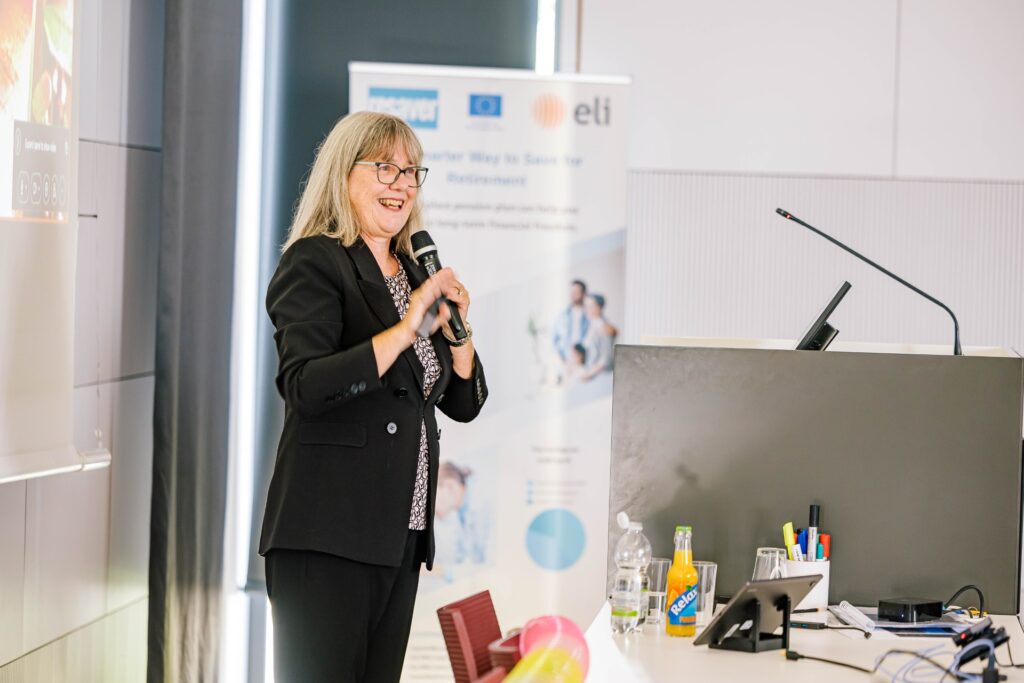
During an inspirational keynote talk, the 2018 Physics Nobel Laureate Prof. Donna Strickland shared her experience as a young researcher working on her PhD which resulted in her winning the Nobel Prize. “A scientist needs, first curiosity, they need to be excited about trying to learn something different,” said Strickland. “An experimental physicist also needs patience – don’t let hard work stop you and keep going!”
Another highlight of the programme was the featured talk on JUICE (JUpiter ICy moons Explorer) by Alessandro Atzei of the European Space Agency which introduced a new session on space applications. “The ESA missions are made possible by the people doing the work,” said Alessandro Atzei. “Forming networks between different organisations like ESA and ELI can open the doors for new cooperation and scientific discoveries.”
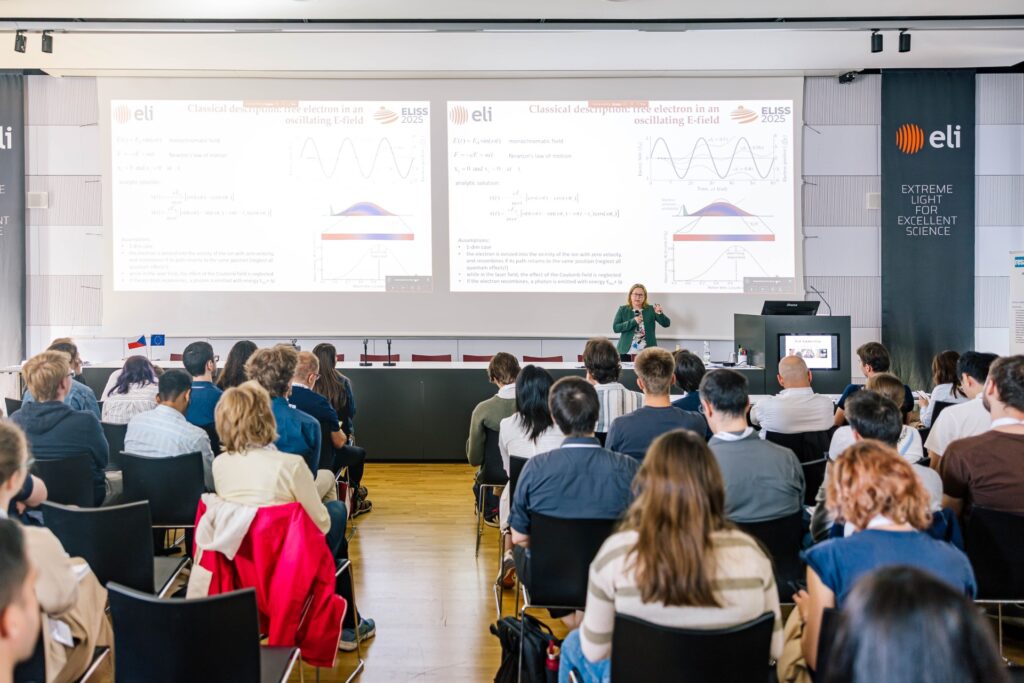
Beyond the scientific programme, ELISS 2025 also offered 11 hands-on activities for participants to learn skills for practical application. From a laboratory challenge and machine learning techniques for data analysis, to a user application writing workshop, these sessions allowed students to gain experience with tools and methods needed for every day work at a research facility like ELI.
The interactive poster session featuring more than 50 student presentations, provided another platform for participants to share their research with peers, receive feedback from experts, and
engage in scientific dialogue. The poster competition with prizes supported by MDPI Electronics recognised the most outstanding contributions.
§ 1st place was awarded to Wiktor Kulesza for his work on an optical phase-sensitive STOC-T method, advancing biomedical imaging through deeper, faster, and more precise in-vivo studies.
§ 2nd place was awarded to Alžběta Špádová, whose research on nanoparticle-assisted laser wakefield acceleration (LWFA) demonstrated new approaches to stabilising high-energy electron beams.
§ 3rd place was awarded to Hiiro Moriyama for his innovative application of Bragg Magnifier Microscopy to achieve ultrafast, high-resolution 3D imaging of laser-induced stochastic dynamics.

A key objective for ELISS is also to foster networking. The social activities and hands-on sessions were an opportunity for the students to connect with each other, with speakers and ELI staff. Additionally, direct engagement with ELI’s Human Resource representatives showcased various career paths for young scientists at ELI.
“There’s never been a better time to be working in science,” said Allen Weeks, ELI Director General. “The scientific and technical opportunities are tremendous, and we are looking for bright new talent to help us accomplish them.”
The 2025 ELISS was more than a summer school: it is a launchpad for careers, a training ground for scientific skills, and a growing network of future leaders in high-power laser science. The young researchers bring enormous enthusiasm and energy, making ELISS not only scientifically enriching but also a fun and vibrant week of engagement and activities