


The Extreme Light Infrastructure ERIC (ELI) and Lawrence Livermore National Laboratory (LLNL) signed a new Memorandum of Understanding (MoU) to build on an existing strategic partnership that has already seen significant advances in high-power laser technology. The collaboration reflects the commitment of both institutions to advancing scientific research and laser innovation.
ELI and LLNL have a long-standing cooperation with LLNL building and delivering the L3 HAPLS (High-Repetition-Rate Advanced Petawatt Laser System) laser system to the ELI Beamlines Facility near Prague. The L3 HAPLS laser system is designed to deliver petawatt-class pulses with energy of at least 30 J and durations below 30 fs, at a 10 Hz repetition rate. The system is already being extensively used, capitalising on its reliability and high repetition rate, while a clear plan is in place to continue ramping up its performance toward the full technical design parameters. These capabilities are essential for driving secondary sources like electrons, ions, and x-rays, and for advancing the understanding of laser-plasma interactions.
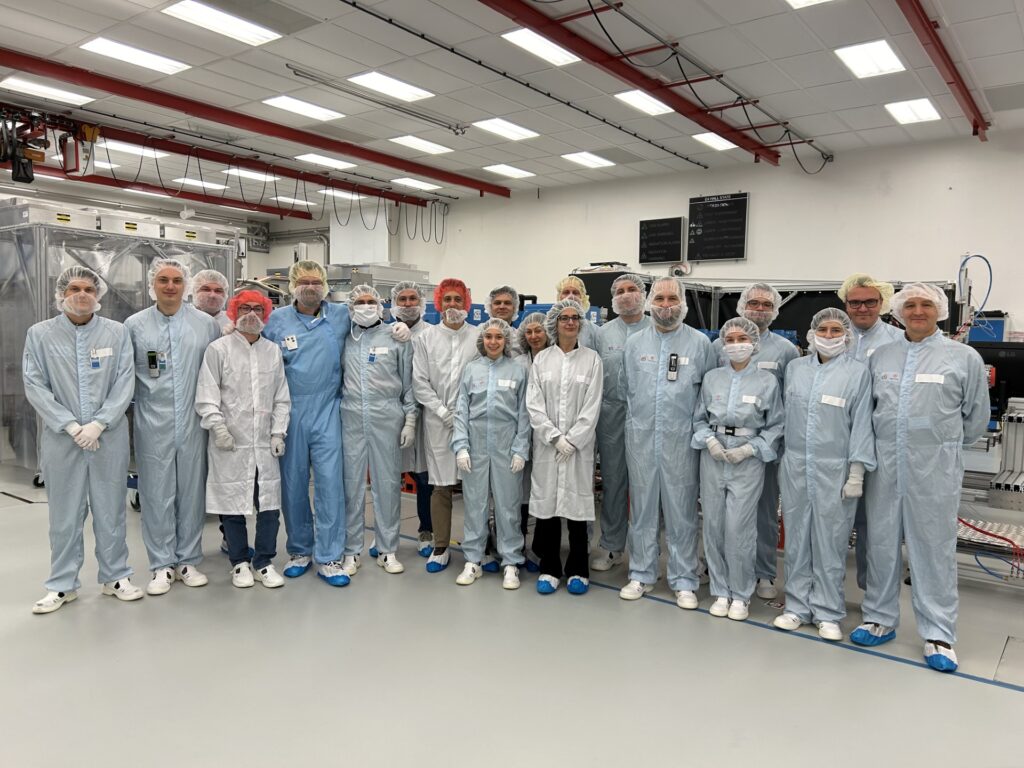
The L3 HAPLS is a central feature in ELI’s scientific offer and provides a powerful tool for exploring high-intensity laser experiments with relevant applications in fields like materials science, medical therapy, and non-destructive analysis. It is also particularly well suited for exploratory research in laser-driven fusion.
As part its commitment to enable high-impact collaborative research ELI recently launched a Mission-based Access Call in inertial fusion energy (IFE). The programme is designed to support complex, multidisciplinary research projects that aim to push developments in laser-driven fusion physics and technology and address key scientific and technical challenges related to IFE.
The Call, which has already received strong interest from US partners, also highlights the importance of international cooperation in developing the technologies necessary for fusion energy. Through this ongoing collaboration, both ELI and LLNL are advancing technologies that are essential for the future of sustainable energy.
The close cooperation with the US scientific user community is evident in the growing demand for ELI’s state-of-the-art facilities within the framework of ELI’s User Programme. With increasing proposal submissions and a rising user base, the United States stands out as the country with the third-highest number of proposals in the past five Calls. This underlines the significance of transatlantic cooperation in advancing laser science and highlights the strong and ongoing engagement of US-affiliated researchers in ELI’s User Programme.
“We are pleased to see the active engagement of US-based researchers in experiments at ELI, leveraging the advanced technology, including the L3 HAPLS system,” says Allen Weeks, ELI Director General. “This collaboration exemplifies the strength of international partnerships in driving forward scientific research and technological advancements. Together ELI and LLNL are shaping the future of laser science.”
Last year, LLNL researchers performed an experiment in cooperation with ELI staff that integrated machine learning and optimisation technologies to enhance the performance of the L3 system. This effectively boosted precision and efficiency, paving the way for even greater advancements in high-power laser experiments and research. The success of this experiment opens new avenues in laser-plasma interaction physics.
“We are looking forward to expanding our existing collaborations with ELI on areas such as ultrabright high-repetition-rate sources for enhanced radiography, fusion and plasma physics research,” says Matt Hill of LLNL. “This includes developing technologies with multiple applications such as high-repetition-rate target systems and diagnostics that can survive sustained operation close to one of the highest intensity and highest average power lasers in the world. ELI has also already acted as a great proving ground for our machine learning and optimisation technologies, and the MoU should help us expand this as well in future.”
As ELI and LLNL work together to push the frontiers of laser science, their expertise is combined for the continuous development laser technologies. This agreement lays the foundation for the exchange of staff, internship opportunities for students and postdocs and fostering a culture of knowledge-sharing and intellectual collaboration. These initiatives will not only strengthen the ties between the two institutions but also expand the scope of joint research initiatives. Through this continued collaboration, ELI and LLNL are committed to addressing the challenges of tomorrow and shaping the future of laser science and technology.