


ELI’s 7th User Call drew record participation from the global scientific research community, with 170 experiment proposals submitted by teams from 30 countries. In total, 680 scientists took part as Principal and Co-Investigators, reflecting both the scale of demand and the widening scope of research being carried out across ELI’s facilities.
“The response to this Call shows that ELI has reached a new level of maturity,” says Allen Weeks, Director General of ELI. “Researchers are increasingly pursuing ambitious, interdisciplinary experiments that make full use of ELI’s integrated scientific offer.”
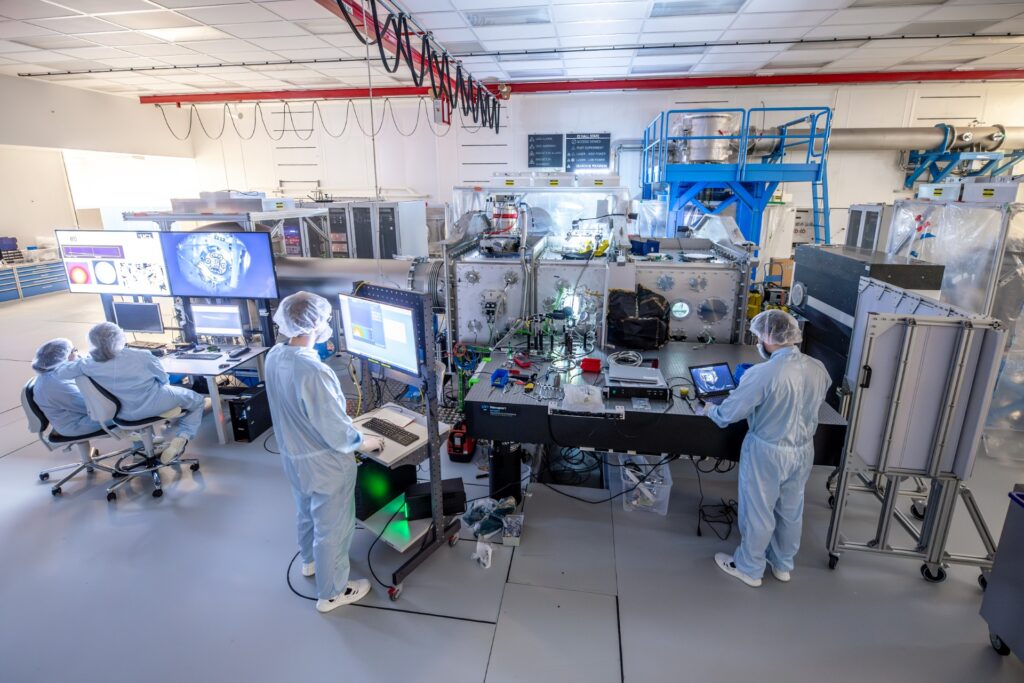
Since the launch of the User Programme, ELI has received a total of 733 proposals from 38 countries, involving over 1,800 individual applicants. Of these, 369 have been awarded beamtime, of which more than 70% have been completed. This demonstrates ELI’s progress into steady-state operation and providing dependable access for its scientific community.
The 7th Call provided access to 41 instruments across all three ELI facilities, including the newly added High Field Petawatt (HF PW) laser, delivering ultrashort, high-power pulses across three dedicated beamlines for experiments ranging from attosecond pulse generation to electron acceleration and strong-field physicsHF PW laser. The recently added Gammatron beamline again attracted the highest number of proposals in a call with 22 proposals reflecting growing scientific interest in ELI’s emerging capabilities for generating hard X-ray radiation. Sustained demand for the Petawatt-class lasers continues to confirm the importance for high-energy-density and nuclear physics applications.
The geographic profile of participation underlines the international character of the ELI user base. Germany and the United States led submissions in this Call with 15 proposals each, followed by the United Kingdom (14), Hungary (10), and France (9). Czechia, China, Italy, Poland, and Denmark completed the top ten. This balance between European and international participation illustrates ELI’s role as a platform for advanced laser research, bridging scientific communities across continents.
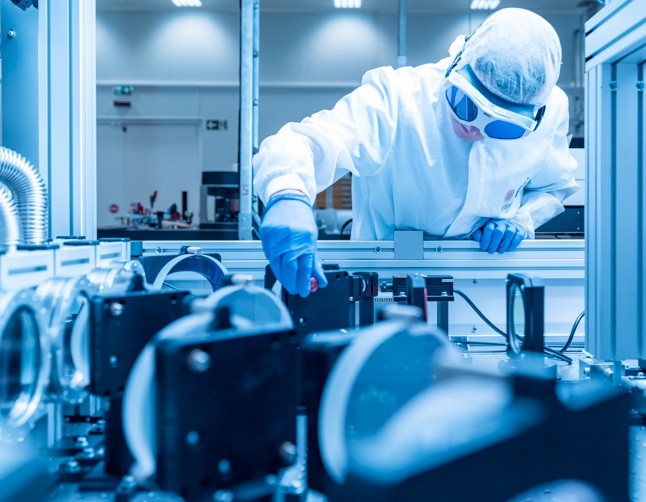
The results also point to a steady broadening of ELI’s research applications. Energy-related studies accounted for the largest share of proposals, followed by work on materials for digital technologies and health and food sciences. Industrial and manufacturing research also featured strongly, alongside emerging themes in environmental science and cultural heritage. The breadth of topics demonstrates how ELI’s laser systems are increasingly being used to address questions of technological and societal relevance beyond traditional physics domains.
All submitted proposals will undergo an excellence-based peer-review process, scheduled for early January 2026. Beamtime allocations for Call 7 will be announced shortly thereafter. Awarded experiments are expected to be implemented between May and October 2026. This process, overseen by international experts, ensures that access remains excellence-based, transparent, and aligned with the highest scientific standards.
Together, these trends reflect how ELI’s User Programme is evolving, not just in scale, but in relevance. With its integrated facilities and an active user base, ELI is shaping the future of high-intensity laser research, reinforcing its role as a driver of both discovery and application.